
Tour Overview
This is it, the ultimate Tanzania safari. The 14 Days Tanzania Grand Safari covers more ground than any other itinerary we offer. It takes you across more ecosystems, more wildlife zones, and more of what makes Tanzania truly special. If you have ever wondered what it feels like to know a country through its wild places, this journey comes as close as possible.
First, the Northern Circuit unfolds in full. Tarangire, Lake Manyara, the Serengeti, and the Ngorongoro Crater each bring something different. Then the safari crosses south into a Tanzania most travellers never reach. Nyerere National Park is vast, remote, and wonderfully uncrowded. Ruaha, Tanzania’s largest park, delivers huge lion prides, wild dogs, and ancient baobab landscapes.
North and south feel like different countries. Seeing both in one trip gives you a perspective very few travellers ever gain. Fourteen days. The whole of Tanzania. Every moment earns its place.
Route: Arusha → Northern Circuit → Nyerere → Ruaha → Zanzibar
Best For: The most dedicated wildlife travellers and those seeking the definitive Tanzania experience
Meals Included: All meals included throughout
Accommodation: Mix of luxury lodges, tented camps, and beach resort
 Day-by-Day Itinerary
Day 1: Arrival in Arusha
Your Kori Safaris guide meets you at Kilimanjaro International Airport and transfers you to your lodge in Arusha. Known as Tanzania’s safari capital, the city sits beneath the slopes of Mount Meru at over 1,400 metres above sea level. The cool highland air is an immediate and welcome contrast to most long-haul journeys.
Settle into your lodge, freshen up, and take time to relax. In the evening, meet your guide over dinner for a full safari briefing. Together, you go through every detail of the fourteen days ahead , the parks, the wildlife, the camps, and what to expect at each stage of this remarkable journey. Tonight is the calm before the wild begins.
Day 2: Tarangire National Park
After breakfast, your safari begins in earnest. The drive south from Arusha takes roughly two hours, crossing open Maasai steppe as the landscape slowly opens up around you.
Tarangire National Park is a magnificent place to start. The park is famous for its enormous elephant herds, which gather along the Tarangire River during the dry season in numbers found almost nowhere else. Families interact at the water’s edge. Bulls move with slow, purposeful authority. Young calves follow close to their mothers, learning the rhythms of the herd.
Beyond elephants, the park shelters lions, giraffes, zebras, wildebeest, and over 500 bird species. Towering baobab trees , some thousands of years old , frame every scene. They give Tarangire a dramatic grandeur that sets it apart from every other park on the Northern Circuit. Dinner and overnight near the park.
Day 3: Lake Manyara National Park
Today’s drive takes you north to Lake Manyara National Park, a compact but wonderfully diverse ecosystem set between the Great Rift Valley escarpment and an alkaline lake that shimmers in the midday heat.
The park is best known for its tree-climbing lions a rare behaviour found in very few places in Africa. Watching a full-grown lion draped across an acacia branch is one of Tanzania’s most unusual and memorable wildlife moments. Scientists still debate why Manyara’s lions developed this habit, which makes the sighting feel even more intriguing.
Beyond the lions, Manyara delivers dense forest elephant encounters in the lakeshore vegetation. Vast hippo pools sit in the shallows. Thousands of flamingos line the lake edge in seasons of abundance, turning the shoreline pink as far as the eye can see. Dinner and overnight near the park.
Day 4: Serengeti National Park
This morning, the journey takes you through the Ngorongoro Highlands toward the Serengeti, a drive of breathtaking variety. Cool montane forest gives way to open Maasai plains. Then, gradually, the long descent into the Serengeti basin begins.
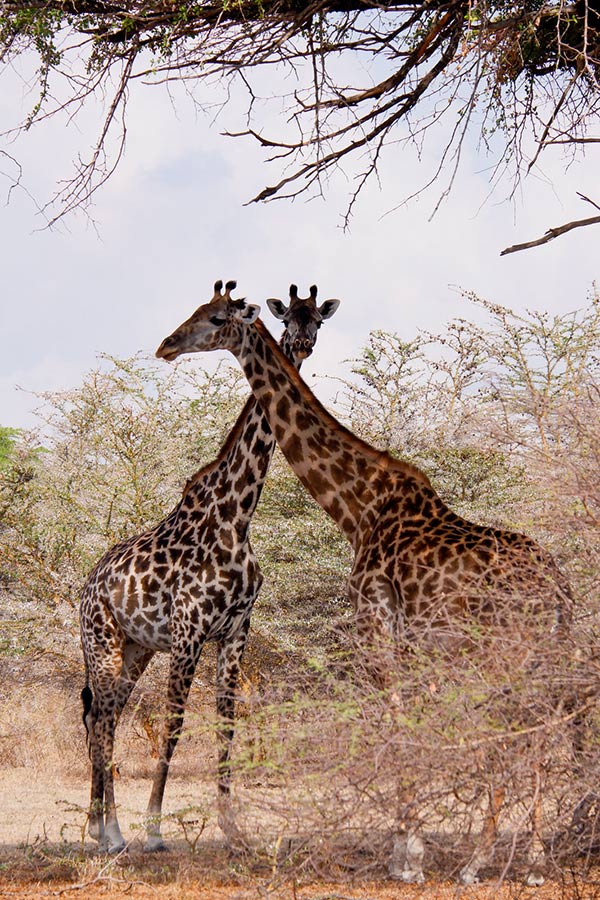
Entering the Serengeti for the first time is a moment most guests describe as genuinely life-changing. The scale is immediate and staggering. There are no fences. No boundaries. The entire ecosystem operates on its own ancient terms, and wildlife moves through it as it always has. Lions appear within the first few kilometres. Zebras and wildebeest stretch to the horizon. Giraffes move through the tree line in the middle distance.
An afternoon game drive sets the tone for the days ahead. Spectacular sunsets follow. Overnight at your lodge or tented camp inside the park.
Day 5: Full Day Serengeti Safari
Today belongs entirely to the Serengeti.
Rise before sunrise for the morning game drive , the golden hour when predators are at their most active and the light is at its most extraordinary. Your guide uses real-time communication with fellow guides across the park to track where the action is best. Big cats are the focus: lion prides on the move, cheetah families scanning the open plain, leopards descending from trees at dawn.
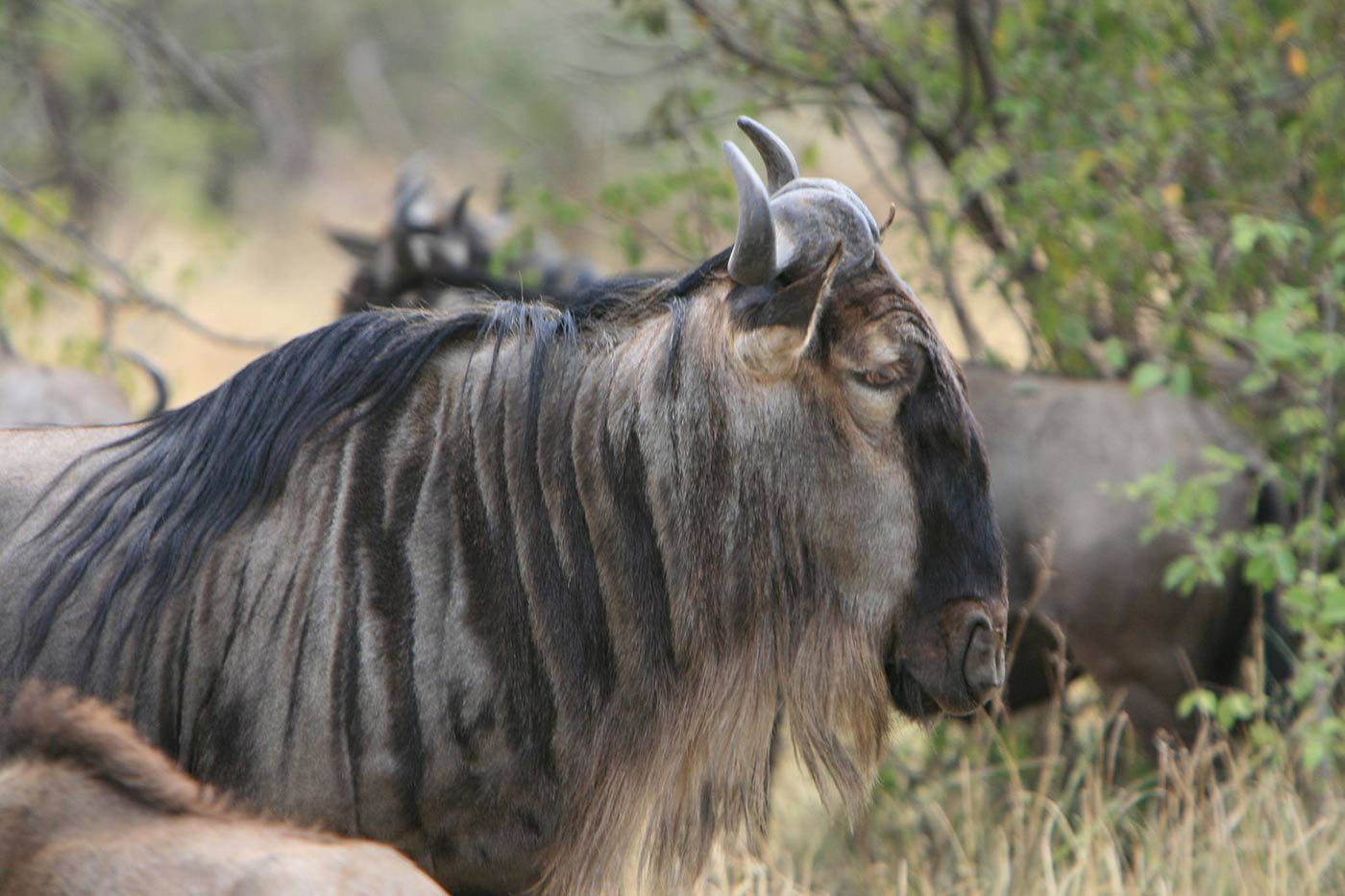
Depending on the season, the Great Migration may also be present. The sight of hundreds of thousands of wildebeest surging across the plains is one of the most powerful wildlife experiences on earth. Even outside migration season, the Serengeti’s resident wildlife ensures a day filled with remarkable encounters from first light to last.
An optional sunrise hot-air balloon safari is available for those seeking an aerial perspective over the plains , a truly extraordinary experience.
Day 6: Northern Serengeti and Mara River
This morning, you drive north into a part of the Serengeti that most visitors never reach. The Northern Serengeti is wilder, more remote, and far less visited than the central zone. As you travel, the landscape shifts , open plains give way to rolling hills, riverine forest, and rocky valleys that feel genuinely untouched.
The Mara River is the destination. Between July and October, wildebeest and zebra gather here in enormous numbers to make one of nature’s most dramatic crossings. Thousands surge into crocodile-filled water in a churning, roaring mass of hooves and spray. Some are taken. Most make it across. Then the process begins again.
Even outside crossing season, the northern zone delivers exceptional game viewing. Elephant herds, giraffe, topi, and the full range of Serengeti predators all move through this landscape. The sense of space and solitude here is rare even by Tanzania’s high standards. Overnight at your camp in the north.
Day 7: Ngorongoro Crater
After a final morning game drive in the Serengeti, drive east toward the Ngorongoro Conservation Area. The landscape rises steadily as the highlands begin. Dense forest closes in around the road. Then, at the crater rim, the trees clear , and the view opens over one of Africa’s most dramatic natural wonders.
Descend into the Ngorongoro Crater for a full-day game drive on the crater floor. The caldera is 260 square kilometres of enclosed, wildlife-rich grassland, forest, and soda lake. Black rhinos graze the open ground , one of the best places in Africa to see this critically endangered species. Lion prides stalk through the short grass. Hippos crowd the shallow lakes. Flamingos line the shore in their thousands.
The crater delivers wildlife in a density that surprises even experienced safari visitors. Many describe it as the single greatest wildlife experience of their lives. Overnight at a lodge on the crater rim, with views across the caldera as the sun goes down.
Day 8: Flight to Nyerere National Park
This morning, you leave Northern Tanzania behind and fly south to a completely different world.
Nyerere National Park , formerly the Selous Game Reserve , covers an area larger than Switzerland. It holds one of the largest concentrations of wildlife in Africa. Yet very few tourists ever visit. The park receives a tiny fraction of the visitors that pass through the Serengeti each year. That is precisely what makes it extraordinary.
The landscape here is raw and untamed. There are no neat tourist circuits, no well-worn tracks. Instead, there are vast floodplains, dense riverine forest, open woodland, and the mighty Rufiji River winding through it all. Upon arrival, settle into your lodge and take in the atmosphere of one of Africa’s most authentic wilderness destinations. Your first game drive begins in the late afternoon. Wild dogs, crocodiles, buffalo, and lion all inhabit this park in healthy numbers.
Day 9: Nyerere – Boat Safari and Walking Safari
Today brings two experiences that set Southern Tanzania apart from every northern park on the circuit.
The morning starts on the water. A boat carries you down the Rufiji River , Africa’s mightiest waterway by volume. Hippos surface and submerge in the shallows. Massive Nile crocodiles bask on every exposed sandbank. Elephants drink at the river’s edge, pulling water into their trunks with relaxed efficiency. Fish eagles call from dead trees above the bank. The river is alive in every direction, and drifting silently through it gives you access to wildlife and behaviour that no vehicle can reach.
In the afternoon, a guided walking safari begins. An experienced, armed ranger leads you through the bush on foot. Suddenly, every track, smell, and sound carries new meaning. You notice things that a vehicle always obscures. Fresh lion spoor in the mud. The alarm call of a bird responding to something in the grass ahead. The smell of a buffalo herd just out of sight. Walking through wild Africa is the oldest form of safari , and Nyerere is one of the very few places in Tanzania where it is fully permitted.
Day 10: Nyerere – Full Day Game Drives
A full day to explore Nyerere’s vast and varied landscapes at your own pace.
The park is enormous, and each area offers something different. Open floodplains in the north attract huge buffalo herds and the lions that follow them. Riverine forest along the Rufiji provides shelter for elephant, leopard, and countless bird species. The woodland interiors are the domain of wild dogs , one of Africa’s most endangered and exciting predators, and more reliably spotted in Nyerere than almost anywhere else on the continent.
Unlike the northern parks, Nyerere operates with very few vehicles in the field. Game viewing feels private and exclusive. You can spend an hour at a single sighting without another vehicle arriving. You can pull off the track and simply sit in the silence of one of Africa’s last great wild places. That quality of stillness is something that money cannot buy in the north. Here in Nyerere, it simply comes with the territory.
Day 11: Flight to Ruaha National Park
After breakfast, board a light aircraft and fly west to Ruaha National Park , Tanzania’s largest national park and one of the most underrated safari destinations in all of Africa.
Ruaha is different from everything you have experienced so far. The landscape is rugged and dramatic. Ancient baobab trees dot the hillsides. Rocky escarpments rise above dry riverbeds carved deep into the earth. The Great Ruaha River winds through the park, drawing wildlife to its banks throughout the year.
Upon arrival, your first game drive begins immediately. Ruaha supports some of the largest lion prides in Africa , groups of ten, fifteen, even twenty animals are not uncommon. Wild dogs patrol wide territories across the park. Elephant herds move through the baobab-studded plains in impressive numbers. Settle into your camp and let Ruaha’s extraordinary atmosphere begin to work on you.
Day 12: Ruaha – Full Day Wildlife Experience
Today is entirely devoted to Ruaha , and the park rewards full immersion.
Morning game drives follow the Great Ruaha River, where the best wildlife concentrations gather at the water’s edge. Crocodiles line every bank. Hippos occupy every pool. Elephant families come and go throughout the day, drinking and bathing with unhurried ease. Meanwhile, on the open plains above the river, lion prides move through the tall grass. Leopards rest in the shade of rocky overhangs. Cheetahs scan the open ground from termite mounds.
Ruaha’s combination of predator density, elephant numbers, and dramatic scenery is remarkable. Moreover, the near-absence of other vehicles means every sighting feels personal , as though the park is sharing something with you specifically, rather than performing for a crowd. By evening, Ruaha has earned its place as one of Africa’s true safari greats. Overnight at camp as the African night closes in around the river.
Day 13: Flight to Zanzibar
After a final morning at camp, board your flight from Ruaha to Zanzibar. The journey takes roughly two hours and covers the full length of Tanzania from west to east.
The contrast between departure and arrival is extraordinary. You leave behind the ochre earth, dry riverbeds, and ancient baobabs of Ruaha. Within two hours, the Indian Ocean appears below , turquoise and impossibly clear, fringed by white sand and coconut palms. The Spice Island unfolds as the aircraft descends.
Transfer to your luxury beach resort overlooking the Indian Ocean. Change out of safari clothes. Walk to the shore. The water is warm. The sand is soft. The horizon is unbroken blue. Order a cold drink and let two weeks of extraordinary Africa settle into a quiet, satisfied stillness. You have earned every moment of this.
Day 14: Zanzibar – Departure
Your final morning in Tanzania. The Indian Ocean is already warm when you wake, and the beach belongs to you in the early-morning quiet before the day fully begins.
Take a last walk along the shore. Swim in the shallows. Have a slow breakfast of fresh tropical fruit, local bread, and Zanzibari coffee as the sun climbs over the water. Depending on your flight schedule, you may also have time to explore Stone Town’s UNESCO-listed alleyways , carved doors, spice markets, and centuries of layered culture packed into a few remarkable square kilometres.
Then comes the transfer to Zanzibar International Airport, and the journey home. You leave Tanzania carrying fourteen extraordinary days: elephant herds in Tarangire, flamingos in Manyara, lions in the Serengeti, rhinos in the Ngorongoro Crater, wild dogs in Nyerere, river crossings in Ruaha, and the warm Indian Ocean at the end of it all. Tanzania has given you everything. It always does.
What’s Included & Excluded
What’s Included
✓ All park and conservation fees
✓ Professional English-speaking safari guide
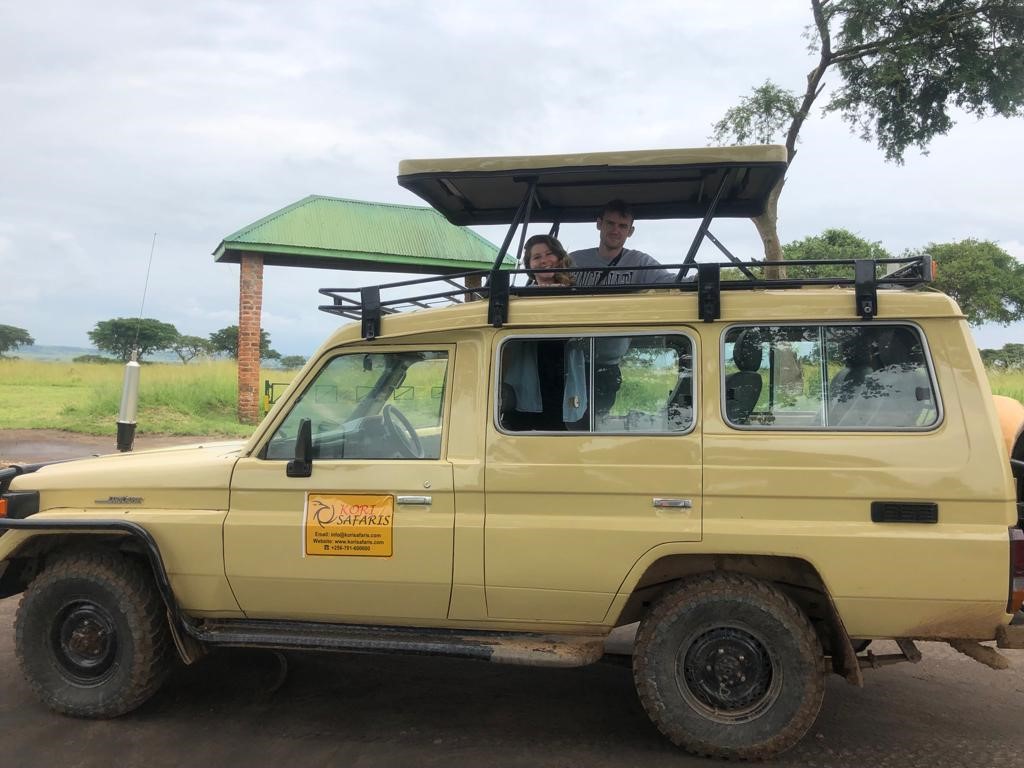
✓ 4×4 safari land cruiser / game drive vehicle
✓ Accommodation as specified per itinerary
✓ All meals as specified (B = Breakfast, L = Lunch, D = Dinner)
✓ Safari bottled drinking water
✓ Flying doctors emergency evacuation insurance
✓ Airport/hotel transfers
What’s Excluded
✗ International and domestic flights
✗ Visa fees (Tanzania visa ~USD 50)
✗ Travel insurance (strongly recommended)
✗ Tips & gratuities for guides and camp staff
✗ Personal items, laundry, and souvenirs
✗ Alcoholic and soft drinks
✗ Optional activities (balloon safari, guided walks)
✗ Items of personal nature