
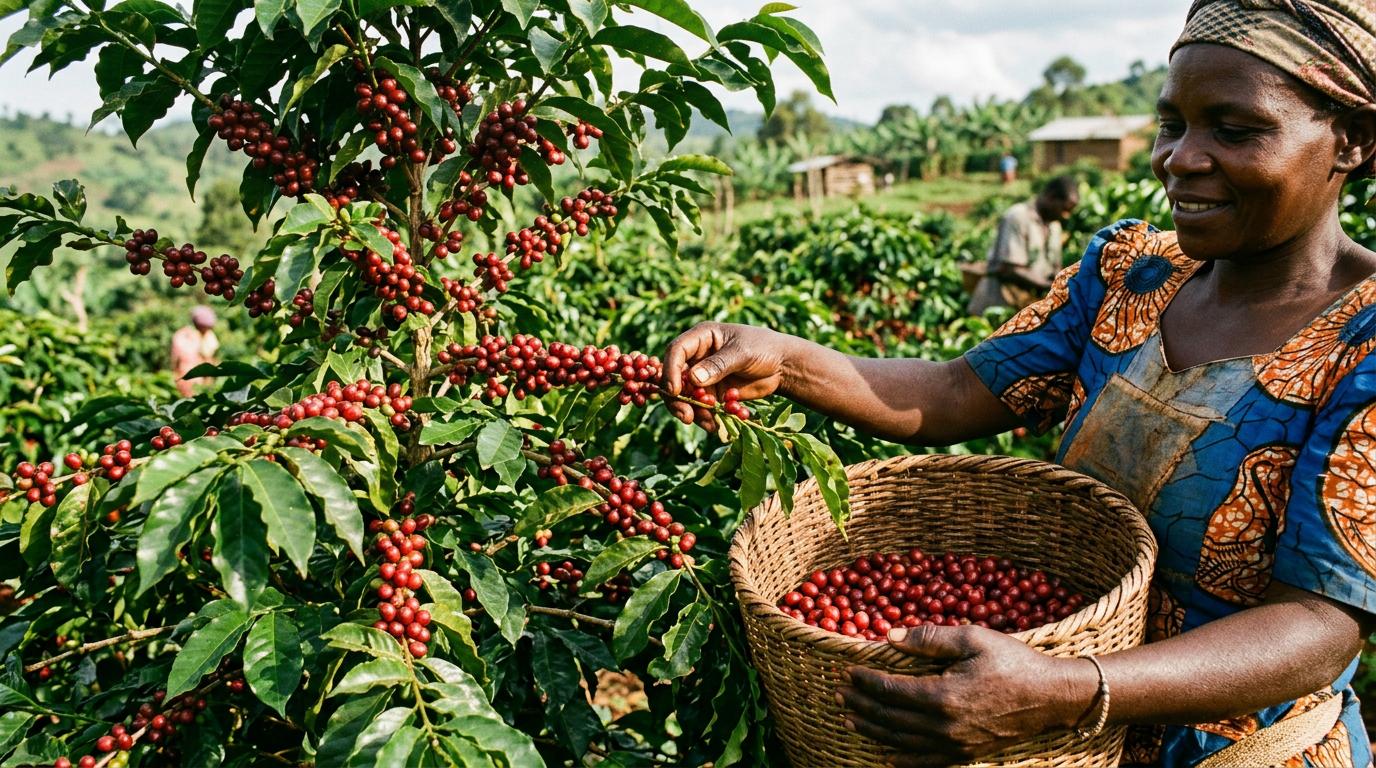
Imagine walking through a green Ugandan coffee garden early in the morning. The air is fresh, and birds are singing. Ripe coffee cherries hang from the branches. A local farmer shows you how to pick the cherries and explains how the beans are processed. Then you taste a cup of coffee made from beans grown on that very farm. This is Uganda coffee tourism, and it is a different kind of African adventure.
Many travellers know Uganda for mountain gorillas, chimpanzees, elephants, lions and the mighty River Nile. Yet there is another side to the country waiting to be discovered. It includes farms, food, local communities and the stories behind everyday products.
One product could open the door to this new kind of travel: coffee.
Uganda is one of Africa’s leading coffee producers. Tourism officials and industry players are now exploring how coffee farms and processing facilities can become attractions in their own right. The idea is to help visitors follow coffee from the farm to the cup. At the same time, it would create extra opportunities for farmers and rural communities. Source: The EastAfrican.
So, could coffee tourism become one of Uganda’s next big travel experiences? And how could it fit into a safari holiday?
Uganda Wants Travellers to Discover More Than Wildlife
Uganda has many reasons to attract international visitors. Its national parks offer wildlife encounters, and its forests are home to remarkable primates. The landscapes range from mountains and lakes to open savannah.
However, a holiday does not have to end with a game drive or a national park visit.
Today, travellers want to understand the places they visit. They want to meet local people, try traditional foods and learn about farming. They also like to see how everyday products are made.
This interest creates an opportunity for agritourism. This type of tourism connects visitors with farms, agricultural activities and rural life.
Coffee is a natural fit for Uganda.
The country grows both Robusta and Arabica coffee. Robusta is closely linked to Uganda’s coffee heritage. Farmers widely grow it around the Lake Victoria basin and in central Uganda. Arabica grows in suitable higher-altitude areas. These include the slopes of Mount Elgon in eastern Uganda and the Rwenzori Mountains in the west.
These growing regions offer more than farming. They also offer landscapes, local knowledge, farming traditions and a chance for visitors to learn something new.
Uganda’s Tourism Board and industry representatives have been discussing how to develop coffee tours. They want better itineraries, accommodation and visitor experiences. The aim is to help travellers spend more time in coffee-growing areas. It would also give local businesses more ways to earn from tourism.
What Is Coffee Tourism?
Coffee tourism lets visitors explore the journey of coffee. They follow it from the plant in the garden to the drink in the cup.
Instead of simply buying a bag of coffee in a shop, you see where it comes from. You also meet some of the people who produce it.
A coffee tour in Uganda could include:
- Walking through a working coffee farm
- Learning how farmers grow and care for coffee plants
- Seeing how farmers harvest ripe coffee cherries
- Discovering how coffee is dried, sorted and processed
- Watching coffee beans being roasted
- Learning how different brewing methods change the flavour
- Tasting locally grown, freshly prepared coffee
- Enjoying local food and meeting members of the farming community
The exact activities depend on the farm, the season and the host.
For coffee lovers, this can be a fascinating experience. For other travellers, it is a chance to understand Uganda’s agriculture, economy and daily life in a more personal way.
Families, students and curious travellers will enjoy it too. A simple cup of coffee becomes a memorable lesson.
Where Can You Experience Coffee Tourism in Uganda?
Uganda has several coffee-growing regions that could fit into a cultural or safari itinerary. Some farms already offer visitor experiences. Others may need advance arrangements. So, always confirm access, activities and availability before you visit.
1. Mount Elgon: Coffee Among the Eastern Highlands
Eastern Uganda is a beautiful setting for coffee and nature experiences.
The Mount Elgon region is known for its highland scenery, fertile farmland and Arabica coffee. This is especially true around Mbale, Kapchorwa and the Sipi area.
You can explore the countryside and learn about coffee growing. You can also combine farm visits with other activities in the region.
Sipi Falls is already popular with travellers who enjoy waterfalls, hiking and scenic views. Adding a coffee experience makes the visit even more varied.
Imagine spending the morning learning how local farmers grow and harvest coffee. Then, in the afternoon, you walk towards the waterfalls.
This mix appeals to travellers who enjoy nature and culture. It also suits those who like to go beyond the usual tourist routes.
Who would enjoy it? Coffee enthusiasts, hikers, photographers, cultural travellers and visitors exploring eastern Uganda.
2. The Rwenzori Region: Coffee with Mountain Views
Western Uganda offers another way to connect coffee with nature.
The foothills of the Rwenzori Mountains are linked to Arabica coffee and beautiful mountain scenery. You can meet farming communities, explore the countryside and learn how farmers produce high-quality coffee.
Some estates in the region are developing farm visits and learning experiences. For example, Bagheni Coffee Estate in Ruboni Village advertises coffee farm tours, nursery demonstrations, harvesting experiences and processing activities.
Please contact the estate directly to confirm current availability before you travel.
A coffee experience here could complement a wider western Uganda journey. That journey might include Queen Elizabeth National Park, Kibale Forest or the Rwenzori region.
Rather than rushing from one attraction to the next, you can take your time. You can get to know the people and landscapes that make the region special.
3. Central Uganda: Discovering Robusta Coffee
Central Uganda is another key part of the country’s coffee story.
Robusta coffee has deep roots in Uganda. Many farming communities around the Lake Victoria basin and the central region grow coffee alongside other crops.
A visit to a coffee farm here could show you how farmers grow and process Robusta. You would also learn why it matters to local livelihoods and Uganda’s agricultural economy.
Central Uganda also fits naturally into a wider trip around Kampala, Entebbe and the surrounding countryside.
However, do not assume that every coffee farm is a tourist attraction. Arrange a guided visit with a farm or operator that welcomes guests.
4. Western Uganda: Coffee and the Farm-to-Table Experience
Western Uganda offers another way to link agriculture with tourism.
Some farms are going beyond growing and selling coffee. They are exploring experiences such as nature walks, cycling, local food and farming lessons.
For example, recent reports have highlighted Clark Farm in Kyenjojo district. It combines coffee production with nature walks, cycling and farm-to-fork experiences. Confirm which activities are available before you plan a visit.
For travellers, the appeal is seeing how agriculture, food and daily life connect.
For farmers, the opportunity is bigger. They can earn from selling their produce and also from welcoming visitors who want to learn about it.
From Coffee Plant to Cup: What Happens During a Tour?
One of the most interesting parts of coffee tourism is seeing how much work goes into a morning cup. Here is what a visit may look like.
Step 1: Walk Through the Coffee Garden
Your visit may begin among the coffee plants.
A guide or farmer can explain how the plants grow and how farmers care for them. They can also tell you why climate, soil and altitude affect production.
You may learn the difference between Arabica and Robusta. You may also find out why Uganda grows both.
Step 2: Learn How Coffee Is Harvested
Coffee cherries do not all ripen at the same time.
Depending on the season and the farm, you may see workers picking ripe cherries. You may also learn how farmers choose the right fruit for processing.
Hands-on harvesting may be possible at the right time of year. However, it is not guaranteed on every visit.
Step 3: Discover Processing and Drying
After harvest, the coffee cherries must be processed.
The method depends on the type of coffee and the producer. You may learn how workers separate, dry and sort the beans. You may also see how they prepare the beans for the next stage.
This part of the tour shows that coffee quality depends on more than growing the plant.
Step 4: Watch the Roasting Process
Roasting green coffee beans brings out their aroma and flavour.
A roasting demonstration shows how heat, time and technique shape the final result.
If you usually buy roasted coffee without thinking about where it comes from, this can be an eye-opening moment.
Step 5: Taste the Finished Coffee
The experience ends where many coffee lovers would want it to end: with a cup of coffee.
You may get to taste freshly prepared coffee. You can also learn how flavour, aroma and brewing methods differ.
It is a simple but rewarding way to understand the work behind Uganda’s coffee.
Why Coffee Tourism Matters for Local Communities
Coffee tourism is not just another activity for visitors. It could also create new opportunities for rural communities.
Coffee farmers traditionally earn money by selling their harvest. Tourism could add a second source of income if farms develop suitable visitor experiences.
A farm that welcomes tourists may earn from guided tours, demonstrations, refreshments and meals. It may also earn from coffee sales or accommodation, where available.
Other local businesses may benefit too. Guides can lead visitors through farms and nearby attractions. Restaurants can serve local dishes, and craft makers can sell their products. Transport providers can move visitors between destinations. Meanwhile, accommodation businesses can encourage travellers to stay longer.
The wider community gains most when tourism spending reaches many local businesses, not just one activity.
However, these benefits are not automatic. Successful coffee tourism needs planning, reliable access and good visitor facilities. It also needs trained guides and fair arrangements with farming communities.
It also needs respect for farmers’ work. A coffee farm is a working business, not just a backdrop for photos.
Responsible tourism should create value for both visitors and the people who welcome them.
Coffee Tourism and Uganda’s Growing Tourism Industry
Uganda is working to diversify its tourism products and encourage visitors to see more of the country.
In June 2026, Uganda launched its national coffee brand, “Uganda Coffee: It’s in Our Nature,” at the World of Coffee event in Brussels. The launch aimed to strengthen Uganda’s identity as a coffee origin country. It also set out to promote the quality and story of Uganda’s coffee around the world. Source: Ministry of Foreign Affairs of Uganda.
The coffee brand and the growing interest in coffee tourism support each other.
Coffee branding tells international audiences about Uganda’s coffee and where it comes from. Coffee tourism, in turn, could let travellers experience those origins in person.
Instead of only seeing Uganda’s coffee on a supermarket shelf, visitors could travel to a growing region. They could meet farmers, learn about processing and taste coffee right where it is produced.
This builds a stronger link between the product and the country.
It also gives Uganda another reason to attract visitors who care about food, agriculture, sustainability and local culture.
How to Combine Coffee Tourism with a Uganda Safari
One of the most exciting ideas is to pair coffee experiences with Uganda’s well-known wildlife attractions.
You do not have to choose between a safari and a cultural experience. With thoughtful planning, you can enjoy both.
Option 1: Eastern Uganda Nature and Coffee Trip
Explore the Mount Elgon region and arrange a coffee farm visit. Then discover Sipi Falls and the surrounding countryside.
This option suits travellers who love hiking, landscapes, local culture and agriculture.
Option 2: Western Uganda Coffee and Wildlife Journey
Depending on your route and time, you can combine a coffee experience in the Rwenzori or western region with wildlife. You could add wildlife viewing in Queen Elizabeth National Park or chimpanzee tracking in Kibale Forest.
Design the itinerary around farm access, road travel times and the activities you want to include.
Option 3: A Wider Uganda Adventure
If you have more time, you could combine several experiences, such as:
- Coffee and cultural experiences in a coffee-growing region
- Chimpanzee tracking in Kibale Forest
- Wildlife viewing in Queen Elizabeth National Park
- Gorilla trekking in Bwindi Impenetrable National Park
This trip needs careful planning because the destinations are spread across different parts of the country.
The best route depends on your available days, interests, budget and preferred accommodation.
What Should You Know Before Booking a Coffee Tour?
Coffee tourism is still developing as a structured tourism product in Uganda. So, confirm the details of any visit before you make plans.
Here are some important points to consider:
- Check the season. Coffee harvesting depends on the region and the crop cycle. If you want to see or join the harvest, ask the farm when it is likely to happen.
- Arrange your visit in advance. Not every farm accepts walk-in visitors. Confirm opening times, access and costs. Also check whether a guide is available.
- Ask what is included. A tour may include a farm walk, a processing demonstration or a tasting. However, not every experience offers all of these.
- Allow enough travel time. Farms may be far from major towns or national parks. Consider road conditions and travel times when you plan your itinerary.
- Respect the farming community. Ask permission before you photograph people. Follow your guide’s instructions and avoid disrupting work on the farm.
- Choose experiences that benefit local people. Where possible, pick organised visits that work directly with farmers and local businesses.
Good planning helps you get more from the experience. It also makes sure the visit is worthwhile for your hosts.
Could Coffee Tourism Become Uganda’s Next Big Travel Experience?
Uganda already has the natural attractions that draw visitors from around the world. Mountain gorillas, chimpanzees, elephants, lions, waterfalls and the Nile remain big reasons to visit.
Coffee tourism offers something different.
It lets travellers discover the country through its farms, food, local communities and farming heritage.
It can also encourage visitors to explore places they might otherwise overlook. In turn, it can create more opportunities for rural businesses.
There is still work to do. Farms need suitable visitor facilities, and tour operators need reliable itineraries. Travellers also need clear information about what is available.
Still, Uganda has a strong starting point: a robust coffee industry and many communities with stories worth sharing.
The next step is to turn those stories into experiences that travellers can enjoy responsibly.
Perhaps your next visit to Uganda will include a gorilla trek, a game drive or a boat trip on the Nile.
Or perhaps it will also include a walk through a coffee garden. You could meet a farmer and taste a cup of coffee whose journey you have followed from plant to cup.
That could be one of the most memorable ways to discover a different side of Uganda.
Discover Uganda Beyond the Safari with Kori Safaris
At Kori Safaris, we believe discovering Uganda should be about more than famous attractions. It should also be about experiencing the country’s landscapes, culture, communities and daily life.
Coffee tourism adds another dimension to a Uganda holiday.
Maybe you love wildlife, cultural experiences, nature or exploring the countryside. Either way, a thoughtfully planned itinerary can help you discover more of what Uganda offers.
If you would like to add coffee experiences to a safari, the first step is simple. We help you identify suitable farms and confirm their visitor arrangements. Then we build a route around your interests.
Your Uganda adventure can go beyond the ordinary.
Explore our Uganda and Rwanda wildlife safaris or visit Kori Safaris to start planning your next East African journey.
Kori Safaris , Discover Africa, one experience at a time.